

 Menu
Menu Back
BackSlopes, Drainage, and Erosion: When a Retaining Wall Is Necessary
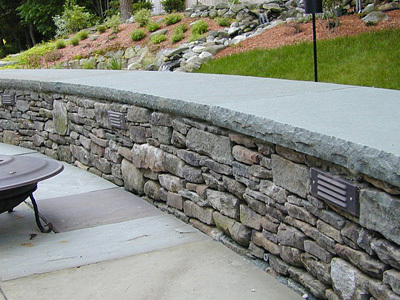 Many Massachusetts homeowners assume a retaining wall is mainly a decorative landscape feature. In reality, retaining walls are often a structural solution used when a property has slope, drainage, or soil stability problems that cannot be corrected with simple surface improvements. While some walls are installed to improve appearance or define outdoor spaces, others are necessary to prevent damage, control runoff, and make land safe and usable.
Massachusetts properties frequently deal with conditions that increase these issues. Heavy spring rainfall, snowmelt, saturated soils, and repeated freeze-thaw cycles can accelerate erosion and cause slopes to shift over time. If you are seeing recurring water movement, soil loss, or unstable yard areas, the problem may be deeper than appearance alone.
Functional Need vs Optional Upgrade
An optional retaining wall is typically chosen for aesthetics, garden borders, seating walls, or creating visual structure in a flat yard. A necessary retaining wall is different. It is installed because the land is failing to perform properly.If water repeatedly moves where it should not, soil continues washing away, or a slope prevents safe use of the yard, the issue is no longer cosmetic. It becomes a grading and drainage problem that often requires engineered correction.
Steep or Uneven Slopes That Cause Runoff
One of the clearest signs a retaining wall may be needed is a yard with steep or uneven elevation changes. You may notice rainwater rushing downhill, mulch washing into walkways, muddy channels forming, or lawn areas thinning out because water never absorbs evenly.This happens because gravity is moving water too quickly across the surface. Instead of soaking into the ground, runoff gains speed and strips soil as it travels. On Massachusetts properties with hillsides or rear yard drop-offs, this is especially common during spring thaw and seasonal storms.
If regrading alone cannot flatten the slope enough to slow runoff, a retaining wall may be required to hold soil in place and create level sections. In many cases, the wall allows the yard to be terraced so water can be managed in stages rather than racing downhill.
Water Moving Toward the Home or Pooling After Rain
If you regularly see water collecting near the foundation, running toward the house, or sitting in low areas for days after rainfall, that is a warning sign. Many homeowners try extending downspouts or adding surface drains, which can help temporarily, but recurring pooling usually points to improper grade.The ground around the home should direct water away, not toward the structure. When the surrounding land slopes incorrectly, moisture pressure can build near foundations, basements, patios, and walkways.
A retaining wall becomes necessary when grade correction requires holding back higher soil elevations or reshaping the land to redirect water. Without structural support, newly moved soil may fail and slide back into its original position. In these cases, the wall is part of the drainage solution, not a separate feature.
Visible Erosion, Soil Loss, or Exposed Roots
Another common signal is visible erosion. Homeowners often notice bare patches, displaced mulch, roots becoming exposed, planting beds washing out, or soil collecting at the bottom of a hill after storms.This means the property is actively losing material. Once erosion starts, it typically worsens each season. Freeze-thaw cycles in Massachusetts can loosen already unstable soil, making spring runoff more destructive.
Surface fixes such as adding more mulch or reseeding grass may hide the problem briefly, but they do not stop slope movement. A retaining wall may be necessary when soil must be permanently stabilized and protected from continued washout.
Areas That Cannot Be Safely Used or Built On
Some yards technically have space, but it is unusable because of slope. You may have a backyard too steep for seating, play areas, gardens, patios, or access between levels. Walking across it may feel awkward or unsafe, especially when wet.This is where retaining walls often provide functional value. By holding back grade changes, they create level, stable spaces that can actually be used. That may mean a patio zone, lawn section, pathway, or safer transition area.
If the only way to make the area practical is by cutting into a slope or building up land, structural support is usually required. Simply placing features on unstable ground often leads to settlement and failure later.
Early Signs of Structural Impact
Retaining walls are also necessary when surrounding land pressure begins affecting nearby structures. Watch for patios that shift or sink, cracked edging, leaning fences, steps pulling apart, or soil pressing against foundations and hardscape surfaces.These symptoms often indicate soil movement or hydrostatic pressure from trapped water behind sloped areas. When water saturates soil, it becomes heavier and pushes outward. Winter freezing can worsen movement as expanding moisture disrupts surrounding surfaces.
At this stage, delaying repairs can increase costs. A properly designed retaining wall with drainage components can relieve pressure, stabilize the grade, and protect nearby structures.
Why Recurring Problems Matter
A one-time puddle after a major storm may not require a wall. But repeated runoff, repeated erosion, repeated settling, or repeated water intrusion means the land is not functioning correctly.Recurring issues are usually signs of a grading problem that needs to be solved at the property level. Treating symptoms year after year often costs more than correcting the cause.
Retaining Walls Should Be Part of a Full Landscape Plan
A retaining wall should never be treated as a standalone fix. The best results come when it is integrated into an overall landscape installation plan that includes grading, drainage routing, soil management, access, and usable layout design.For Massachusetts homeowners, that matters even more because seasonal rain, frost movement, and changing ground moisture can quickly expose shortcuts. When a wall is installed correctly as part of a complete site solution, it protects your property, improves usability, and solves problems at their source.
Contact us at Krefta Landscaping toady at 781-249-0012 or message us using this Online Form. One of our team members will call you back to discuss your requirements.
<< Back to Blog